
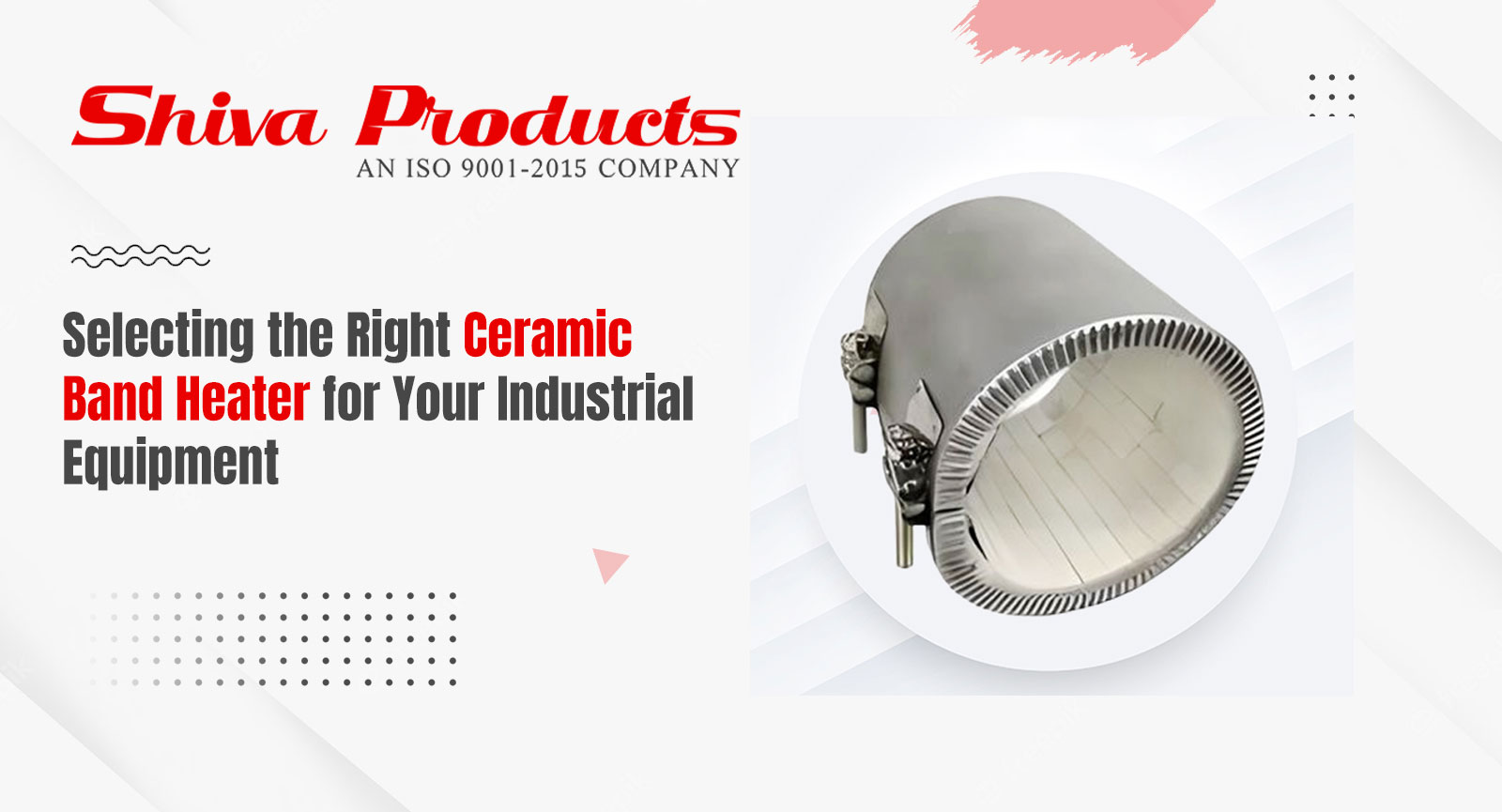
One of the most important industrial processes in a wide range of sectors is heating. In industrial operations, heating pipes or tubes are frequently required to allow liquid to pass through them at greater temperatures. Barrels and containers containing chemicals or viscous liquids also require heating. Ceramic band heaters, a kind of heating element utilized in many industrial applications, are responsible for this. The main function of these heaters, which have become increasingly important over time, is to heat pipes and tubes indirectly.
Learn more about ceramic band heaters in this blog, including how they work and how to choose one.
Overview of Ceramic Band Heaters
Ring-shaped ceramic band heaters clamp onto cylinder-shaped surfaces and provide external heating. Ceramic heaters, which conduct heat at medium-to-high temperatures, have a maximum working temperature of 600°C. Their glass wool insulation provides superior thermal efficiency and minimizes heat loss to the environment.
These heaters usually last longer; however, this isn’t always the case. This is because ceramic blocks, also known as knuckles, are supplied with coiled resistance wire. The coiled resistance wire doesn’t oxidize and burn through as quickly as the ribbon since it has a reduced surface area to interior cross-sectional area ratio.
These heaters can be built with several termination designs and have holes and cutouts. Improved insulation reduces the amount of power required to maintain the barrels at the right temperature by preventing more heat from leaking into the atmosphere. It makes it possible to attach the heater to the pipe more easily and without being constrained by loose fittings or surface flaws.
Construction of a Ceramic Band Heater
The ceramic mat is held in place, and the core is protected by a sheath material with serrated edges composed of stainless steel, galvanized iron, or aluminum-coated stainless steel. Ceramic fiber knuckles with holes are utilized for optimal heat conductivity and dielectric strength.
These holes are filled with nickel/chromium heating elements to provide the necessary watt density and even heat dispersion. Glass wool insulation is situated between the knuckles and the outer sheath, as seen in the image. The terminal box protects the connection terminal wire and connects to the power source.
What are the best ways to pick a ceramic band heater?
Select a ceramic heater with the wattage that best meets the needs to avoid temperature overruns and extend the heater’s lifespan. Before you buy the ceramic band heater, you should be aware of a few factors.
First of all, what are band heaters used for?
They are widely used to heat the nozzles, pipes, and barrels of extrusion and injection molding equipment. They also provide fast indirect heating, which is perfect for a variety of sectors, especially polymers. During configuration, one can select one- or two-piece heaters, various closure kinds, and various lead or post terminal types.
Additionally, you may group them according to specifics like mounting, installation, size, kind of termination, sheath or sleeve, and performance needs. Additionally, thermocouples and adjustable thermostats make temperature control possible. Temperature regulation is difficult with ceramics because of their propensity to retain heat in addition to their propensity to transfer heat effectively. This can disrupt operations due to overheating, particularly in the plastics sector.
Conclusion
Our selection of ceramic band heater designs includes both conventional and customized choices. The heater is put through a series of quality inspections to ensure both its longevity and quality. Shiva Heaters is a reputable producer and supplier of band heaters, and we provide warranties for our products. For any of your industrial heating requirements, contact us immediately.

Shiva Heater
Shiva Products has been providing heating solutions since 2011 by utilizing their expertise in manufacturing industrial heaters and heating elements.